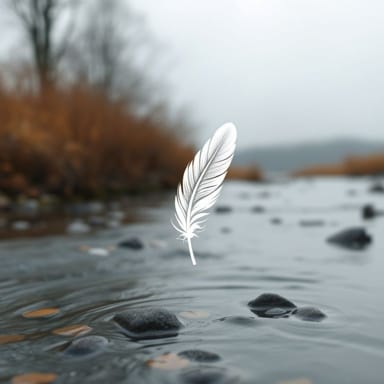
In the ever-changing course of human behavior, few expressions capture emotional unpredictability as vividly as just as fickle as a feather in a stream. This phrase paints a poetic image of how easily people’s moods, loyalties, or affections can shift without warning, much like a delicate feather drifting along the whim of flowing water. The metaphor illustrates instability, both beautiful and frustrating, reflecting a deeper truth about the fluidity of human emotion and decision-making. Whether in love, politics, or friendships, understanding this kind of fickleness helps us explore not only literature and culture but also our own internal contradictions.
Understanding the Meaning Behind the Metaphor
The phrase just as fickle as a feather in a stream carries rich figurative meaning. A feather is inherently light and powerless, subject to whatever direction the stream’s current takes. Similarly, a fickle person lacks emotional consistency or intellectual firmness, easily swayed by external influences or internal whims.
The Nature of Fickleness
Fickleness can manifest in various aspects of human life
- Emotional Fickleness– Changing moods quickly, being passionate one moment and indifferent the next.
- Romantic Fickleness– Falling in and out of love easily or frequently switching affections.
- Ideological Fickleness– Shifting beliefs and opinions with the crowd or according to convenience.
When a person is described as being like a feather in a stream, it implies that they are directionless, reacting to circumstances rather than acting with intention or purpose.
Origins and Cultural Resonance
While the exact origin of the phrase is uncertain, it shares kinship with similar metaphors found in literature and philosophy. The feather has long been a symbol of fragility and the stream a symbol of life’s ongoing momentum. Together, they reflect a human tendency to go with the flow rather than resisting change.
Similar Idioms in Literature and Culture
Many cultures express this concept through idioms
- Gone with the wind– Suggests disappearance or change with ease.
- Like a leaf in the wind– Indicates lack of direction and control.
- A chameleon personality– Describes someone who adapts too easily to new surroundings or opinions.
These idioms highlight how deeply rooted the idea of emotional or moral inconsistency is in the human experience.
Psychological Perspectives on Fickleness
From a psychological standpoint, the behavior likened to a feather in a stream may stem from multiple factors. Personality traits, upbringing, past traumas, or even mental health conditions can contribute to emotional inconsistency.
Possible Psychological Causes
- Low Self-Concept– People unsure of who they are may change their behavior to please others.
- Anxious Attachment Style– These individuals may cling to people and ideas out of fear, but let go just as easily when uncertain.
- Borderline Personality Traits– A pattern of unstable moods, behavior, and relationships is central to this diagnosis.
Understanding these deeper causes can generate empathy rather than frustration when dealing with someone considered fickle.
Symbolism in Art and Media
The idea of being as fickle as a feather in a stream has found its way into songs, novels, and visual art. It often symbolizes a character’s journey through self-doubt, emotional instability, or transformation.
Feathers and Streams as Symbols
- Feather– Represents delicacy, purity, or ephemerality.
- Stream– Represents time, transition, and the inevitability of change.
Combined, they emphasize a sense of helplessness in the face of external forces, often used to dramatize the psychological struggles of a character.
Everyday Examples of Fickleness
In daily life, we often encounter or even embody this quality ourselves. Consider someone who frequently changes their career path, or a friend whose opinions shift drastically depending on who they’re speaking with. Social media has also amplified this trait, where public opinion swings swiftly from admiration to criticism.
Fickleness in Relationships
Romantic relationships particularly suffer from emotional inconsistency. One partner might shower the other with affection one week, only to become distant the next. This type of unpredictability leads to emotional exhaustion and confusion.
Fickleness in Public Discourse
Modern political climates are also rife with changing opinions. Public figures rise to fame only to be discarded days later. The attention span of the crowd mimics the feather in the stream, floating from one idea to another without much critical engagement.
Is Fickleness Always Negative?
While often portrayed negatively, fickleness can sometimes be a sign of openness or adaptability. In certain situations, being able to change course swiftly is an advantage, particularly in creative fields or during crises that require flexibility.
When Fickleness Becomes Fluid Intelligence
- Allows rapid adaptation to new situations.
- Enables creative problem-solving.
- Prevents rigid thinking or dogmatism.
Thus, not all changeability should be seen as weakness. The challenge lies in distinguishing thoughtful flexibility from emotional instability.
How to Cope with Fickle Behavior
When dealing with someone just as fickle as a feather in a stream, it helps to manage expectations and avoid taking their changes personally. Establishing boundaries, promoting open communication, and avoiding emotional dependency can protect your own well-being.
Strategies for Coping
- Don’t personalize their inconsistency.
- Set limitson how much emotional labor you invest.
- Communicate clearlywhen their behavior affects you.
Understanding that the behavior stems from internal conflict may ease frustration and foster compassion without enabling chaos.
Final Reflections
The metaphor just as fickle as a feather in a stream captures the tension between beauty and instability, passivity and emotion. It speaks to the heart of human unpredictability how we often float through decisions, emotions, and allegiances without anchoring ourselves. Whether used to describe a character in literature, a friend who changes moods daily, or a shifting society, this image offers a timeless lesson. We are all, at times, feathers in the current. The question is whether we stay adrift or eventually find a shore.