Formic acid and acetic acid are two commonly discussed organic acids in chemistry, often mentioned in laboratories, industrial processes, and even in everyday life. While both belong to the family of carboxylic acids and share some similarities in their chemical structure, they are distinct compounds with different properties, sources, and applications. Understanding the differences between formic acid and acetic acid is important for students, chemists, and anyone interested in chemical sciences, as confusing the two can lead to mistakes in chemical reactions, industrial production, and scientific experiments. Examining their molecular composition, physical and chemical characteristics, natural occurrence, and industrial use reveals why these acids are not the same, despite both being simple organic acids.
Chemical Structure of Formic Acid
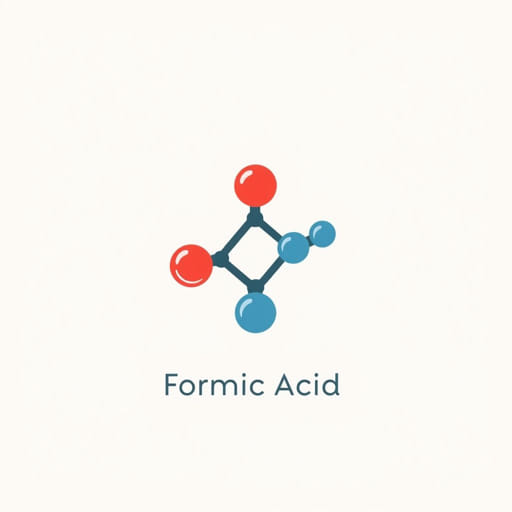
Formic acid, also known as methanoic acid, is the simplest carboxylic acid with the chemical formula HCOOH. It consists of a single carbon atom bonded to a carboxyl group (-COOH) and a hydrogen atom. This simplicity gives formic acid unique properties compared to other carboxylic acids, including higher acidity relative to some larger acids due to its small molecular size. Formic acid is a colorless liquid with a pungent odor and is highly soluble in water. Its reactive nature makes it useful in various chemical processes, including as a preservative, antibacterial agent, and in the production of other chemicals.
Characteristics of Formic Acid
- Chemical formula HCOOH
- Smallest carboxylic acid
- Colorless liquid with a strong, pungent odor
- Highly soluble in water
- More acidic than larger carboxylic acids due to minimal steric hindrance
Chemical Structure of Acetic Acid
Acetic acid, also known as ethanoic acid, has the chemical formula CH3COOH. Unlike formic acid, it contains two carbon atoms one in the methyl group (CH3-) and one in the carboxyl group (-COOH). This structural difference results in distinct chemical and physical properties. Acetic acid is widely recognized as the main component of vinegar, giving it its characteristic sour taste and smell. It is a colorless liquid at room temperature and is miscible with water and many organic solvents. Acetic acid’s moderate acidity makes it versatile for both culinary and industrial applications.
Characteristics of Acetic Acid
- Chemical formula CH3COOH
- Contains two carbon atoms
- Colorless liquid with a sharp, vinegar-like odor
- Widely used in food industry, industrial synthesis, and chemical laboratories
- Moderate acidity due to slightly larger molecular size
Comparison of Formic Acid and Acetic Acid
While formic acid and acetic acid both belong to the carboxylic acid family, there are clear distinctions that separate them chemically, physically, and functionally. Their differences stem primarily from the number of carbon atoms and the resulting molecular structure. Formic acid, with only one carbon atom, is more reactive and more acidic, while acetic acid, with two carbon atoms, is less acidic but more stable under common conditions. These structural differences also influence their solubility, odor, and applications in industry and daily life.
Key Differences
- Carbon content Formic acid has one carbon; acetic acid has two.
- Acidity Formic acid is stronger due to its smaller size; acetic acid is milder.
- Natural occurrence Formic acid is found in ant venom and stinging nettles; acetic acid occurs in vinegar and as a fermentation product.
- Applications Formic acid is used in leather processing, textiles, and chemical synthesis; acetic acid is widely used in food, chemical production, and pharmaceuticals.
- Odor Formic acid has a pungent, sharp odor; acetic acid has a vinegar-like smell.
Natural Occurrence
Formic acid naturally occurs in the venom of ants, bees, and other stinging insects, which is the origin of its name formic, derived from the Latin word formica meaning ant. It also exists in certain plants such as stinging nettles. On the other hand, acetic acid is most commonly found in vinegar, which is produced by fermentation of ethanol by acetic acid bacteria. While both acids are naturally occurring, their biological and environmental roles differ significantly. Formic acid often serves as a defense mechanism in insects, whereas acetic acid contributes to flavor and preservation in food systems.
Industrial and Practical Uses
The industrial applications of formic acid and acetic acid are vast but distinct. Formic acid is primarily used in leather processing, textile production, rubber coagulation, and as a preservative in livestock feed. Its high reactivity and acidity allow it to act as a reducing agent and antimicrobial agent. Acetic acid, by contrast, is heavily used in the food industry as vinegar and as an acidulant in various foods. Industrially, it is employed in the production of synthetic fibers, plastics (such as polyethylene terephthalate), and pharmaceuticals. Understanding the different uses highlights why these acids are not interchangeable despite both being carboxylic acids.
Applications Summary
- Formic Acid Leather tanning, textile processing, rubber coagulation, antimicrobial agent, chemical synthesis.
- Acetic Acid Food preservative, vinegar production, plastics and polymers, pharmaceuticals, chemical synthesis.
Safety and Handling
Both acids require careful handling due to their corrosive nature. Formic acid, being more acidic, can cause burns on skin contact and irritation to the eyes and respiratory system. Acetic acid is less aggressive but still corrosive at high concentrations. Safety protocols, including protective gloves, eyewear, and ventilation, are necessary when handling either compound. Their differing chemical properties influence storage requirements, compatibility with other chemicals, and environmental precautions.
formic acid and acetic acid are distinct chemical compounds, each with unique molecular structures, properties, natural occurrences, and practical applications. Formic acid, with the formula HCOOH, is the simplest carboxylic acid, highly acidic and reactive, commonly found in ant venom and stinging plants. Acetic acid, with the formula CH3COOH, contains an extra carbon, is milder in acidity, and is most familiar as the main component of vinegar. While both acids belong to the same chemical family and share certain characteristics such as solubility in water and the presence of a carboxyl group, they are not the same and should not be confused.
Understanding the differences between formic acid and acetic acid is crucial for chemistry students, industrial chemists, and anyone working with organic acids. Their distinct chemical behavior affects laboratory reactions, industrial processes, and safety measures. By recognizing their unique properties, one can apply each acid appropriately in scientific, industrial, and daily life contexts. Therefore, the simple answer is no formic acid is not acetic acid. They are related but fundamentally different carboxylic acids with separate identities, chemical behaviors, and uses in the world around us.