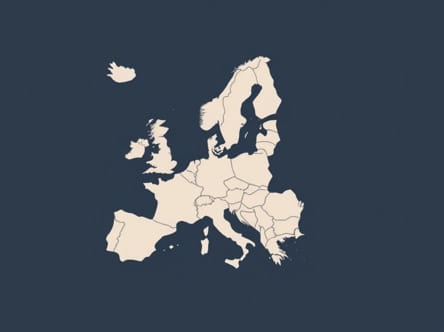
Europe, with its layered histories and intersecting cultures, offers a rich tapestry of stories and contradictions. When explored crosswise a term implying a journey across, against, or at angles the continent reveals not only its chronological timeline but also its spiritual, political, and cultural litany. The term Europe Crosswise A Litany” evokes an image of walking diagonally through the heart of Europe, from medieval cathedrals to war-torn fields, and from romantic ruins to reborn democracies. This phrase also suggests a poetic, almost sacred, recitation of Europe’s milestones, its sufferings, and its collective hopes. Such an idea deserves an exploration that is not merely geographical but symbolic and thematic as well.
Understanding the Phrase Europe Crosswise A Litany
Crosswise as a Journey Against the Grain
To move crosswise in Europe is not just to travel across physical space, but to move in a way that challenges linear narratives. Instead of following the traditional east-to-west or west-to-east historical progression, a crosswise journey may cut diagonally across borders, ideologies, and epochs. For instance, one might draw a symbolic line from the icy shores of Finland to the sun-baked temples of Sicily, discovering how vastly different environments gave rise to unique expressions of humanity.
This crosswise view of Europe emphasizes intersections moments where the Renaissance met the Reformation, where Ottoman art touched Byzantine relics, where socialism contested with capitalism, and where memory clashes with modernity. To perceive Europe in this fragmented, cross-referential manner is to appreciate its complexity without reducing it to a single narrative.
Litany as a Repetitive Invocation
A litany typically refers to a form of prayer with repeated supplications or invocations. When applied to Europe, the term captures the repeated patterns of struggle and redemption that shape the continent’s identity. The litany of Europe includes invocations of revolution and resistance, cries of famine and war, and chants of unity and rebuilding.
Each historical moment whether it is the Thirty Years’ War, the Industrial Revolution, the Holocaust, or the fall of the Berlin Wall becomes a stanza in this litany. Together, they form a spiritual rhythm that reflects the trials and resilience of a continent that has often been at the center of world affairs.
Thematic Dimensions of Europe’s Crosswise Litany
War and Memory
Few regions have been as deeply scarred by war as Europe. The bloodied trenches of World War I, the blitzed cities of World War II, and the more recent Balkan conflicts all form critical entries in Europe’s litany. These events are not isolated they intersect with literature, philosophy, art, and international law.
- How has literature reflected the trauma of Europe’s wars?
- What memorials exist to remember these events, and how are they interpreted today?
- How have these wars altered the concept of national identity?
The answers to these questions form a crosswise narrative that challenges the idea of progress as a linear journey. Instead, Europe’s memory is circular and recursive traumas revisited, ideologies reassessed, futures reimagined.
Faith and Secularism
Europe’s religious history is among the most diverse and conflicted in the world. From the Papal States to Protestant reformations, from the Islamic Golden Age in Spain to the Enlightenment’s secular revolutions, belief systems have long collided and coexisted across European soil.
This aspect of the litany includes
- The architectural echoes of faith cathedrals, synagogues, mosques
- The philosophical movements that challenged or reaffirmed belief
- The migration patterns that have brought new spiritual traditions to old cities
To travel crosswise through Europe’s faith is to encounter both deep reverence and stark rejection. A chapel in rural France might exist just kilometers from a secular university town. This spiritual juxtaposition adds depth to the litany.
Art and Resistance
Europe’s artistic heritage is a powerful thread in its crosswise story. From the paintings of Caravaggio to the poetry of Rainer Maria Rilke, from protest graffiti on the Berlin Wall to the silent sculptures commemorating lost lives, art in Europe often resists, reflects, and redeems.
Across centuries, European art has functioned as
- A witness to oppression (e.g., Holocaust literature and artwork)
- A form of rebellion (e.g., Dadaism after WWI, punk culture in Thatcher’s Britain)
- A unifier across nations (e.g., the Bauhaus movement, European cinema)
These creative expressions build upon each other to form an aesthetic litany a testament to how culture survives even the darkest hours.
Modern Crosswise Tensions
Migration and Identity
One of the defining themes of 21st-century Europe is migration. Refugees from Syria, workers from Eastern Europe, students from Africa and Asia all of them contribute to an evolving European identity that challenges old categories. A crosswise view reveals the interactions between these diverse communities.
This raises key questions
- What does it mean to be European today?
- How do old nations handle the complexities of multiculturalism?
- How does art, language, and food reflect this new identity?
The litany of Europe thus continues to grow, incorporating new voices, fears, and hopes. The continent’s story is no longer confined to its native sons and daughters it now includes those who journeyed across borders in search of safety and opportunity.
Unity and Fragmentation
The European Union stands as a modern attempt to bind the continent together through shared governance and economic policy. Yet, with events such as Brexit and rising nationalist sentiments in many countries, fragmentation still looms.
The tension between unity and sovereignty is central to today’s European litany. To move crosswise is to observe how integration efforts like the Schengen Agreement coexist uneasily with border controls, cultural protectionism, and political rhetoric aimed at self-preservation.
The Ongoing Recital
Europe Crosswise A Litany is not a closed book. It is an ongoing narrative of struggle, reflection, and reinvention. Each generation adds a verse sometimes a lament, sometimes a hymn of triumph. To understand Europe through this lens is to reject simplicity and embrace contradiction. It means listening to voices from all corners, walking roads less traveled, and recognizing that Europe’s identity has always been shaped by movement, opposition, and the sacred repetition of experience.
In the end, the litany of Europe is not about reaching a final destination, but about journeying with awareness crosswise through time, space, and spirit.