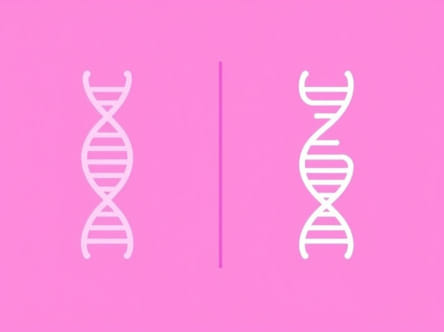
Genes are the fundamental units of heredity that carry the instructions for building and maintaining an organism. They play a crucial role in biological processes by coding for proteins or regulating various cellular functions. However, not all genes are active or serve a clear biological purpose. Some genes are functional, meaning they have a specific and active role, while others are nonfunctional, often considered remnants of evolution or mutations. Understanding the difference between functional and nonfunctional genes provides insight into genetics, disease mechanisms, evolution, and modern biotechnology.
Understanding Genes and Their Roles
What Are Genes?
Genes are sequences of DNA that provide instructions for producing proteins or performing regulatory functions. Each gene occupies a specific position on a chromosome and contributes to an organism’s traits and biological processes. The human genome contains roughly 20,000 to 25,000 genes, but not all of them are active or useful.
The Function of Functional Genes
Functional genes are genes that perform a clear and useful biological role. They are transcribed into messenger RNA (mRNA) and often translated into proteins that contribute to growth, repair, metabolism, immunity, and other vital functions. These genes are essential for life and typically conserved across species due to their importance.
What Are Nonfunctional Genes?
Nonfunctional genes, often called pseudogenes, are DNA sequences that resemble functional genes but lack the ability to produce functional proteins. These genes may have once been functional but lost their activity due to mutations, deletions, or other genetic alterations. While they no longer serve their original function, some may still have regulatory roles or influence gene expression indirectly.
Key Differences Between Functional and Nonfunctional Genes
Structure and Sequence Integrity
- Functional genesThese have intact coding sequences, regulatory elements, and can be transcribed and translated properly.
- Nonfunctional genesOften contain mutations such as premature stop codons, frameshifts, or missing promoters, preventing normal expression or translation.
Expression and Activity
- Functional genesActively transcribed into mRNA and may be translated into proteins. Their activity can be measured in cells or tissues.
- Nonfunctional genesTypically not expressed or transcribed into incomplete or non-functional products. They often remain silent within the genome.
Biological Role
- Functional genesPlay a direct role in cellular processes, physiological responses, and development.
- Nonfunctional genesDo not contribute to active biological functions but may provide evolutionary insights or serve as raw material for new genes.
Conservation Across Species
- Functional genesHighly conserved due to their importance; changes may result in disorders or reduced fitness.
- Nonfunctional genesMore variable across species and often accumulate mutations without selective pressure.
Examples and Biological Implications
Examples of Functional Genes
Common functional genes include
- BRCA1Involved in DNA repair and associated with breast cancer risk when mutated.
- INSThe insulin gene, crucial for regulating blood glucose levels.
- TP53A tumor suppressor gene that controls cell division and prevents cancer.
Examples of Nonfunctional Genes
Notable examples of pseudogenes and nonfunctional genes include
- ΨGLOA pseudogene similar to the globin gene, no longer active due to mutations.
- Processed pseudogenesCopies of mRNA that were reverse-transcribed and inserted back into the genome, but lack regulatory elements.
- Unitary pseudogenesPreviously functional genes that lost their function without duplication.
Evolutionary Insights
Nonfunctional genes offer valuable evidence of evolutionary change. For example, the presence of olfactory pseudogenes in humans suggests that our ancestors had a better sense of smell, which became less important over time. Comparing functional and nonfunctional genes across species reveals the history of genetic adaptations and losses.
Impact on Health and Medicine
Functional Genes and Disease
Mutations in functional genes can cause genetic disorders. For example, mutations in the CFTR gene lead to cystic fibrosis, while changes in the HBB gene cause sickle cell anemia. Understanding which genes are functional helps in diagnosing, treating, and researching diseases.
Pseudogenes and Gene Regulation
Although pseudogenes are nonfunctional in the traditional sense, some may regulate gene expression by acting as decoys” for regulatory molecules or producing non-coding RNA. This emerging field suggests pseudogenes may have hidden roles in gene networks, especially in cancer and other complex diseases.
Genetic Engineering and Research
Knowing which genes are functional is critical in genetic engineering and gene therapy. Scientists avoid targeting pseudogenes unless specifically studying gene evolution or regulatory mechanisms. Functional genes are the main focus in CRISPR, transgenic models, and therapeutic interventions.
How Scientists Determine Gene Functionality
Gene Annotation
Gene annotation is the process of identifying and labeling genes in a genome. This includes predicting which genes are likely functional based on sequence features, known protein-coding regions, and conservation with other organisms.
Experimental Validation
Scientists use various methods to confirm gene functionality, such as
- RNA sequencing (RNA-seq)To detect active transcription.
- Protein assaysTo confirm protein production.
- Gene knockout studiesTo observe what happens when a gene is disabled.
Bioinformatics Tools
Advanced computational tools can compare gene sequences, identify motifs, predict protein structures, and analyze evolutionary conservation to distinguish functional genes from pseudogenes.
The difference between functional and nonfunctional genes lies in their structure, expression, and biological role. Functional genes actively contribute to the life and health of an organism, while nonfunctional genes often serve as relics of evolution. However, both types of genes are important for understanding the complexity of the genome. Functional genes help us unravel diseases and develop treatments, while nonfunctional genes provide insights into our genetic history and potential hidden regulatory roles. As genetic research continues to evolve, so too will our understanding of these fascinating components of life.