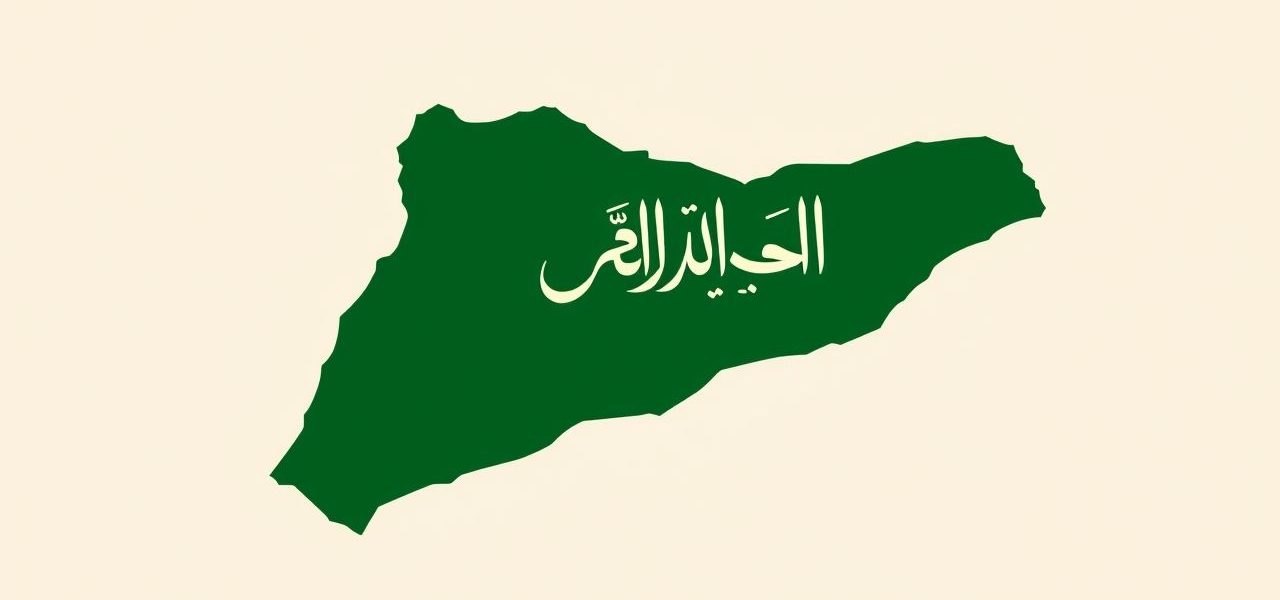
In the history of medieval North Africa and Iberia, the Almohad Caliphate stands out as one of the most powerful dynasties that shaped the region politically, culturally, and religiously. Emerging in the 12th century as a reformist movement, the Almohads challenged previous rulers and established an empire that stretched across the Maghreb and into the Iberian Peninsula. Their legacy is reflected not only in their governance and architecture but also in symbolic elements such as the Almohad Caliphate flag and the territorial expansion depicted in historical maps. Understanding the significance of the Almohad Caliphate flag and map allows us to appreciate how identity, power, and geography were intertwined in their rule.
Origins of the Almohad Caliphate
The Almohad Caliphate originated in the Atlas Mountains of Morocco under the leadership of Ibn Tumart, who founded the movement based on religious reform and strict monotheism. His successor, Abd al-Mu’min, transformed the movement into a political and military force, creating a caliphate that rivaled the Almoravid dynasty before them. By the mid-12th century, the Almohads had conquered vast lands across North Africa and southern Spain, marking a turning point in regional history.
Religious Foundations
The name Almohad derives from al-Muwahhidun, meaning the unitarians or those who proclaim the unity of God. Their ideology emphasized the absolute oneness of God, opposing what they saw as corruption and deviation in earlier Islamic dynasties. This religious zeal provided the foundation for their political authority and influenced their symbols, including the flag.
The Almohad Caliphate Flag
Flags in medieval Islamic dynasties were more than mere identifiers; they carried deep symbolic meaning. The Almohad Caliphate flag was a representation of their religious ideals and their political sovereignty. Unlike modern flags, which often feature complex designs and nationalistic imagery, medieval flags were deeply rooted in religious and dynastic symbolism.
Design and Symbolism
The Almohad flag is often described as a simple but powerful banner. Historical accounts suggest it featured a white background symbolizing purity and divine unity, often with inscriptions or geometric motifs that reflected Islamic principles. Some records mention red elements used to signify authority and strength. The emphasis on simplicity matched the Almohads’ focus on monotheism and reform, aligning with their religious philosophy.
Role in Identity and Authority
Carrying the flag into battle was a symbol of legitimacy and divine support. It was a rallying point for soldiers and a statement of the caliphate’s authority. In the Almohad worldview, the flag was not just political but spiritual, reminding followers of their mission to uphold God’s unity and the purity of faith.
Mapping the Almohad Caliphate
The map of the Almohad Caliphate provides a striking picture of its territorial expanse at its height. Spanning from present-day Morocco to Libya in North Africa and reaching into Al-Andalus in the Iberian Peninsula, the empire represented one of the largest powers of its time. Examining these maps reveals how geography influenced the caliphate’s political and military strategies.
North African Territories
In North Africa, the Almohads controlled vast stretches of the Maghreb. Their authority extended across modern-day Morocco, Algeria, Tunisia, and parts of Libya. Key cities such as Marrakesh, Fez, and Tunis served as political, cultural, and economic hubs, connected by trade routes that enhanced the caliphate’s prosperity.
Iberian Expansion
In Al-Andalus, the Almohads took control of southern Spain and Portugal after overthrowing Almoravid rule. Cities like Seville and Córdoba flourished under their leadership, becoming centers of culture, learning, and architecture. The Almohad presence in Iberia was a defining feature of their empire, although it also brought them into conflict with Christian kingdoms to the north.
Strategic Importance of the Almohad Map
Maps of the Almohad Caliphate demonstrate the strategic challenges they faced in ruling such a vast and diverse territory. Controlling both North Africa and parts of Iberia required strong administration, military power, and secure trade routes across the Mediterranean and Sahara.
Trade and Economy
The caliphate benefited from its geographical position, overseeing trade across the Mediterranean, the Sahara, and the Atlantic. Caravans carried gold, salt, and other goods, enriching the empire. Ports along the North African coast connected the Almohads to wider trade networks that linked Africa, Europe, and the Middle East.
Military Geography
The distribution of their territories also shaped their military strategy. Mountainous regions in Morocco provided natural defense, while river valleys in Iberia supported agriculture and settlement. However, the wide geographical spread also made the caliphate vulnerable to internal rebellion and external threats, especially from Christian kingdoms expanding southward during the Reconquista.
Political and Cultural Influence
The Almohad Caliphate was more than a military power; it left a lasting cultural and intellectual legacy. Its flag and map are symbolic markers of a dynasty that influenced architecture, philosophy, and administration across the western Islamic world.
Architecture and Urban Development
The Almohads were great builders, leaving behind monumental works such as the Koutoubia Mosque in Marrakesh and the Giralda tower in Seville. These structures symbolized both religious devotion and political authority, much like the flag symbolized unity and the map represented territorial strength.
Intellectual Achievements
Under Almohad rule, scholars such as Averroes (Ibn Rushd) thrived, contributing to philosophy, science, and law. Their works influenced both Islamic and European thought, showing how the caliphate’s impact extended beyond its borders.
Decline of the Almohad Caliphate
Despite its power, the Almohad Caliphate began to decline in the 13th century. Internal divisions, revolts, and defeats against Christian forces weakened the empire. The decisive Battle of Las Navas de Tolosa in 1212 marked a turning point, as Christian armies broke Almohad dominance in Iberia. Over time, regional dynasties replaced Almohad authority in both North Africa and Spain.
Impact on the Flag and Map
As the caliphate fragmented, the symbolic power of the Almohad flag diminished. Yet it remained a reminder of a once-great empire. Similarly, maps of the Almohad Caliphate became historical records of a dynasty that once controlled vast lands but eventually gave way to new powers in the Maghreb and Al-Andalus.
Legacy of the Almohad Flag and Map
The Almohad Caliphate flag and map are lasting symbols of a dynasty that shaped the course of medieval North African and Iberian history. They illustrate how identity, belief, and geography defined the empire’s power and challenges. Even in decline, the memory of the Almohads influenced later dynasties and continues to attract interest today.
Key Aspects of the Legacy
- The flag reflected religious purity and the unity of God central to Almohad ideology.
- The map of their territories highlights the vast geographical scope of their rule.
- Their influence shaped architecture, philosophy, and urban development in North Africa and Iberia.
- Their decline illustrates the challenges of maintaining a large empire across diverse regions.
The story of the Almohad Caliphate flag and map offers valuable insights into how symbols and geography defined one of the most powerful dynasties of the medieval Islamic world. The flag embodied their religious mission, while the map illustrated their territorial reach and the challenges of empire-building. Together, they represent not only the history of a dynasty but also the enduring themes of unity, authority, and legacy that continue to resonate when studying the Almohads. Their mark on history remains visible through monuments, scholarship, and the cultural memory of an empire that once bridged Africa and Europe under a single rule.