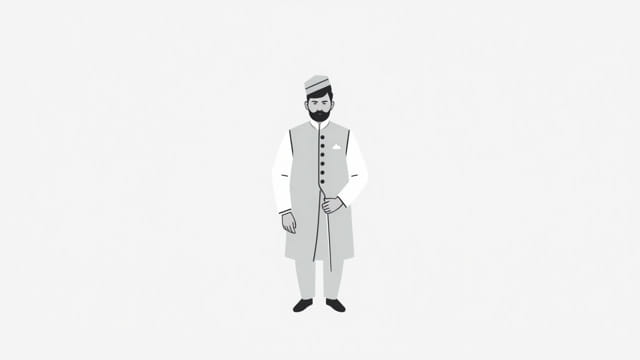
The Indian National Congress, formed in 1885, played a vital role in India’s journey toward independence. While the organization primarily represented the aspirations of Indians under British colonial rule, it occasionally had leaders from outside India, especially in its early years. Among these figures, the first Britisher to become President of the Indian National Congress stands out as a symbol of early international support for Indian political rights. This individual was George Yule, a Scottish businessman and philanthropist who brought both controversy and significance to the Congress’s early leadership history.
Background of the Indian National Congress
Formation and Objectives
The Indian National Congress was founded in December 1885 in Bombay (now Mumbai) by A.O. Hume, a retired British civil servant. The idea was to create a platform for educated Indians to voice their political concerns and communicate with British authorities in a peaceful and constitutional manner. The early years of the Congress were marked by moderate demands, such as increasing Indian participation in civil services and legislative councils.
Influence of British Members
In the initial years, British involvement in the Congress was not uncommon. Several early leaders believed that the presence of sympathetic Britons could lend credibility to the organization and facilitate smoother communication with the British government. This context led to the rise of George Yule, who would become the fourth President of the Congress.
Who Was George Yule?
Early Life and Business Career
George Yule was born in 1829 in Scotland and moved to India in the mid-19th century. He was a successful businessman and became one of the partners in the firm Andrew Yule & Co., which had extensive interests in jute, tea, coal, and other sectors. The Yule family was well-known in British-Indian business circles. George Yule eventually became the Sheriff of Calcutta and was later elected as the President of the Indian Chamber of Commerce.
Connection to Indian Society
Despite being a foreigner, Yule developed a keen interest in Indian affairs. His philanthropic work and relatively liberal views on Indian issues earned him the respect of many Indian leaders of the time. His influence extended beyond commerce, and his name became associated with both business leadership and civic engagement in colonial India.
Presidency of the Indian National Congress
The 1888 Allahabad Session
George Yule was elected as the President of the Indian National Congress during its fourth session held in Allahabad in 1888. His election marked the first time a non-Indian and a Britisher held this position. This decision was met with both praise and criticism. Supporters saw it as a strategic move to show unity and gain favor with the British establishment. Critics, however, feared it could dilute the nationalist spirit of the Congress.
Yule’s Presidential Address
In his address, Yule emphasized the importance of cooperation between Indians and the British for India’s progress. He expressed sympathy for Indian demands, particularly the need for greater representation and civil rights. Though he did not advocate for full self-governance or independence, his moderate stance aligned with the prevailing ideology of the Congress at the time.
Reactions and Significance
Mixed Indian Responses
Indian leaders had differing views on Yule’s appointment. Leaders like Dadabhai Naoroji supported it, believing that having a Britisher at the helm could enhance the Congress’s influence in British political circles. Others were skeptical, feeling that Indian leadership was essential for the organization’s authenticity and effectiveness in representing Indian voices.
British Government’s View
The colonial government observed Yule’s presidency with interest. While they welcomed a known British figure leading the Congress, there was underlying concern about how the Congress might evolve. The presence of a British president momentarily softened the confrontational image of the Congress but did not significantly change official attitudes toward the organization’s demands.
Legacy of George Yule’s Presidency
Paving the Way for Broader Support
George Yule’s leadership of the Congress is often viewed as an early attempt to internationalize Indian political aspirations. His presidency set a precedent that later allowed other foreigners, including Irishwoman Annie Besant, to lead the Congress. It symbolized the potential for cross-cultural and international support for India’s rights.
Temporary Diversion or Strategic Move?
Though his leadership was largely ceremonial and aligned with moderate politics, it helped legitimize the Congress in its formative years. In retrospect, some historians consider it a strategic move to broaden the base of the Congress and engage influential allies within the British Empire.
Return to Indian Leadership
Following Yule’s presidency, the Congress quickly returned to Indian leaders. His tenure remains unique in that he was the only Britisher ever to lead the Congress. The subsequent years saw growing assertiveness among Indian leaders, who pushed for more radical reforms and greater autonomy, eventually leading to the freedom movement’s more militant phases.
Broader Implications in Colonial Politics
The Role of Allies from the Colonizer Nation
George Yule’s presidency illustrates how allies within the colonizing country can play a role in early reform movements. While they may not share the full vision of eventual independence, their presence can help open doors for dialogue, reform, and international awareness.
Lessons for Modern Political Movements
The strategic inclusion of sympathetic outsiders remains relevant in contemporary political and social movements. Whether in environmental activism, global justice campaigns, or indigenous rights, building coalitions across boundaries can amplify a movement’s reach and effectiveness.
George Yule’s election as the first Britisher to become President of the Indian National Congress was a remarkable event in colonial India’s political history. It represented a moment of pragmatic politics, where Indian leaders sought to work within the system and gain allies from the British establishment. While his presidency was brief and largely symbolic, it signaled the Congress’s openness in its early phase and set the stage for future strategic decisions. Over time, the Indian National Congress would grow into a powerful nationalist movement, led by Indians committed to self-rule and independence, but the early involvement of figures like Yule remains a noteworthy chapter in its evolution.