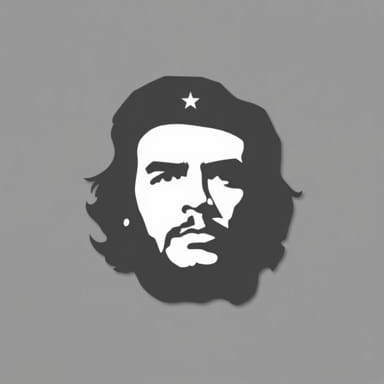
Ernesto Che Guevara remains one of the most iconic figures of the 20th century, remembered not only for his role in revolutionary movements but also for the ideals he championed. His image, often seen on posters and t-shirts, is recognized globally, but behind the symbolism lies the complex story of a man who pursued social justice, equality, and anti-imperialism with unwavering passion. Understanding Che Guevara’s biography means exploring his origins, his transformation into a revolutionary leader, and the enduring legacy he left behind in both Latin America and the world.
Early Life and Education
Birth and Family Background
Ernesto Guevara was born on June 14, 1928, in Rosario, Argentina. He was the eldest of five children in a middle-class family of Spanish, Irish, and Basque descent. Despite being raised in a household with progressive and intellectual values, Che suffered from severe asthma from a young age. His medical condition forced him to develop resilience and mental toughness, which would become defining features of his character.
Academic Pursuits
Che pursued higher education at the University of Buenos Aires, where he studied medicine. During his time as a student, he developed an interest in Marxist theory and the conditions of the poor across Latin America. It was during this period that he began to understand the link between health, poverty, and systemic inequality.
Journey Across Latin America
The Motorcycle Diaries
In 1951, Guevara embarked on a transformative journey across South America with his friend Alberto Granado. Traveling by motorcycle, the two witnessed the harsh realities of life for peasants, miners, and the indigenous population. This journey, later documented in his famous book The Motorcycle Diaries, awakened a political consciousness in Che. He saw firsthand the exploitation caused by capitalist systems and the suffering endured by the poor due to imperialist influences.
Turning to Revolutionary Ideals
The experience left a lasting impression on Guevara. He came to believe that real change could only be achieved through armed revolution. Che’s encounters during his travels helped form his belief in socialism as a tool for liberation. He began reading more deeply into the works of Marx, Engels, and Lenin, setting the intellectual foundation for his revolutionary path.
Involvement in the Cuban Revolution
Meeting Fidel Castro
Che’s revolutionary journey took a decisive turn in 1955 when he met Fidel Castro in Mexico. Castro and his brother Raúl were organizing a movement to overthrow the U.S.-backed dictator Fulgencio Batista in Cuba. Guevara joined the group as a medic but quickly rose through the ranks due to his discipline, strategic mind, and fearlessness in battle.
Guerrilla Warfare in Cuba
Guevara was instrumental in the success of the Cuban Revolution. He led several key battles in the Sierra Maestra mountains, and his leadership in the Battle of Santa Clara in late 1958 was pivotal. Batista fled Cuba shortly afterward, and the revolutionaries claimed victory. Che Guevara emerged as a national hero and was awarded Cuban citizenship for his efforts.
Post-Revolution Role in Cuba
Government Positions
After the revolution, Guevara held several significant roles in the new Cuban government. He was appointed president of the National Bank of Cuba and later Minister of Industry. In these positions, he attempted to reorganize Cuba’s economy based on socialist principles. He also played a key role in foreign policy, forging alliances with other socialist countries and representing Cuba at international forums such as the United Nations.
Promoting Global Revolution
Despite his official roles, Che never abandoned his revolutionary ideals. He believed that the Cuban Revolution was just the beginning. His writings encouraged people in other parts of the world to take up arms and fight against colonialism, capitalism, and imperialism. His famous speech, Create two, three, many Vietnams, is a call to global insurrection.
Later Revolutionary Campaigns
In the Congo
In 1965, Che Guevara left Cuba to lead a group of guerrillas in the Congo, hoping to assist in the fight against the pro-Western government. However, the campaign failed due to internal divisions, lack of local support, and logistical issues. Che returned to Cuba disappointed but still committed to his revolutionary mission.
Mission in Bolivia
In 1966, Che secretly traveled to Bolivia to incite a revolution. His goal was to create a focal point for South American liberation. Unfortunately, the Bolivian campaign lacked the local support and resources it needed. The CIA, working closely with Bolivian forces, tracked Guevara down. On October 8, 1967, he was captured and executed the following day in La Higuera.
Legacy and Influence
Symbol of Resistance
Though his revolutionary campaigns outside Cuba were unsuccessful, Che Guevara became a global symbol of rebellion, justice, and resistance. His face, captured in the iconic photograph by Alberto Korda, has become one of the most reproduced images in history. It is seen on murals, clothing, posters, and more, symbolizing anti-establishment sentiment and revolutionary passion.
Criticism and Controversy
Despite his heroic status, Che Guevara is not without controversy. Critics point to his role in overseeing executions of former Batista supporters and suppressing dissent in post-revolution Cuba. Some view his methods as authoritarian and his ideology as impractical. However, his defenders argue that he acted out of conviction and with a sincere desire to liberate the oppressed.
Enduring Impact
Guevara’s writings, including Guerrilla Warfare, continue to inspire activists and revolutionaries worldwide. His belief in sacrificing personal comfort for collective justice resonates with movements that fight against economic inequality and political oppression. Today, his name and image are invoked not just in Latin America but in protests and movements across the globe.
Ernesto Che Guevara’s life was a journey defined by conviction, struggle, and transformation. From a young medical student in Argentina to a revolutionary martyr in Bolivia, Che’s biography reflects a deep commitment to social justice. While his legacy is debated, there is no denying the profound impact he had on the political landscape of Latin America and beyond. His story continues to spark debate, admiration, and analysis, ensuring that the name Che Guevara remains etched in the history of modern revolution.