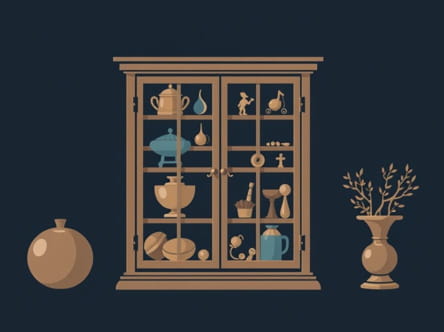
Long before modern museums became centers of public education and cultural preservation, there existed unique collections known as Cabinets of Curiosities. These were private collections of rare, mysterious, or exotic objects assembled by individuals fascinated by the natural world, history, art, and the unknown. Often kept in private homes, these cabinets were both a symbol of knowledge and a display of wealth, reflecting the collector’s interests and worldview. The Cabinet of Curiosities played a crucial role in the history of science and museums, bridging the gap between wonder and empirical observation.
Origins and Early Development
The concept of the Cabinet of Curiosities, also known as a Wunderkammer in German, emerged during the Renaissance period in the 16th century. These collections were influenced by the intellectual spirit of the time, which encouraged the exploration of the world, both geographically and intellectually. European explorers brought back strange and unfamiliar items from newly discovered lands, sparking curiosity and inspiring scholars and aristocrats to assemble collections that would capture the diversity and mystery of the world.
A typical cabinet might include items from a variety of categories, such as natural history, art, antiquities, and religious relics. These objects were often arranged with little scientific classification but with the intent to inspire awe and contemplation.
What Did a Cabinet of Curiosities Contain?
The contents of a Cabinet of Curiosities were incredibly diverse and sometimes bizarre. Collectors sought to gather specimens and artifacts that represented all aspects of knowledge and the natural world. Common items included:
- Fossils, bones, and preserved animals
- Minerals, gems, and shells
- Rare books and manuscripts
- Ethnographic artifacts from foreign cultures
- Scientific instruments such as astrolabes and microscopes
- Paintings, coins, and religious icons
Some collectors even included mythical or fabricated items like unicorn horns (actually narwhal tusks) or mermaid remains, which later turned out to be cleverly assembled fakes. These curiosities blurred the line between fact and fiction, serving as conversation pieces and sparking debate.
Symbolism and Purpose
The Cabinet of Curiosities was more than a collection; it was a reflection of its owner’s intellect and place in society. For scholars, it demonstrated engagement with scientific discovery. For aristocrats, it signaled wealth, power, and access to the exotic. These cabinets also had an educational purpose. They were used to teach others often in private gatherings about nature, history, and human culture.
The symbolic value of these collections also touched on deeper philosophical ideas. Collectors believed that by assembling objects from different realms animal, mineral, human they could grasp the complexity and interconnectedness of the world. It was a microcosm of the universe in one room or even one cabinet.
Evolution Into Museums
Over time, the private Cabinet of Curiosities evolved into more structured and public institutions. The Age of Enlightenment brought with it an emphasis on order, classification, and scientific inquiry. As natural sciences became more professionalized, the chaotic and whimsical nature of cabinets began to give way to more formal museums.
Many famous museums today, including the British Museum and the Ashmolean Museum, trace their origins to private collections of curiosities. These institutions inherited the passion for collecting but applied systematic methods for cataloging and exhibiting objects. Thus, the Cabinet of Curiosities laid the foundation for the development of museum curation and public education.
Influence on Science and Discovery
The importance of Cabinets of Curiosities in the history of science cannot be overstated. These collections encouraged early scientists to compare, study, and document specimens, leading to significant advancements in taxonomy, anatomy, geology, and anthropology. The exchange of items and ideas among collectors also fostered an international network of knowledge sharing long before the internet or academic journals existed.
Notable figures like Carl Linnaeus and Charles Darwin were influenced by this collecting culture. The drive to observe, classify, and understand the natural world was at the heart of both the Cabinet of Curiosities and modern scientific endeavors.
The Cabinet in Popular Culture
In modern times, the Cabinet of Curiosities has seen a revival in popular culture, literature, and art. It symbolizes mystery, exploration, and the blurred boundaries between science and the supernatural. Contemporary artists and writers have used the concept to explore themes of wonder, chaos, and obsession. Even digital archives and interactive exhibits today are sometimes described as virtual cabinets of curiosities.
The enduring fascination with these cabinets speaks to a deep human desire to understand the world through the act of collecting, storytelling, and display. Whether it is through antique curios, taxidermy, or modern digital collections, the idea remains relevant in today’s information age.
Modern Interpretations and Legacy
Today, museums and collectors may still use the Cabinet of Curiosities as a thematic or aesthetic approach. The eclectic and unstructured arrangement allows for creative storytelling and emotional engagement. Some artists create modern cabinets using found objects, vintage items, and mixed media to evoke the spirit of curiosity and exploration.
Meanwhile, some academic institutions continue to preserve historic cabinets as part of their heritage. These serve not only as scientific records but also as cultural artifacts, shedding light on past beliefs, practices, and knowledge systems.
The Cabinet of Curiosities was a powerful expression of the Renaissance and Enlightenment spirit a blend of imagination, inquiry, and awe. It served as the precursor to the modern museum, a space where the strange and the scientific coexisted. By collecting and displaying fragments of the known and unknown world, early collectors paved the way for centuries of exploration and understanding.
In our present era, with access to vast knowledge at our fingertips, the Cabinet of Curiosities reminds us of the value of wonder, the importance of interdisciplinary thought, and the enduring joy of discovering the unexpected.