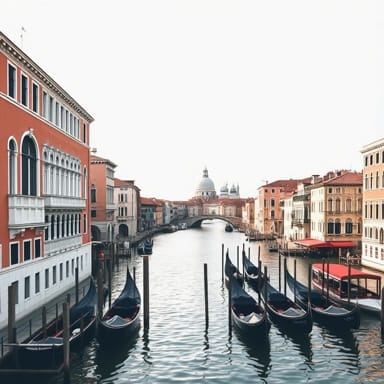
The Grand Canal in Venice is one of the most iconic waterways in the world, winding its way through the heart of a city built entirely on water. Lined with centuries-old palaces, churches, and bustling markets, the canal is not just a mode of transportation but a symbol of Venice’s historical, cultural, and architectural richness. Visitors from around the globe come to admire the reflections of Gothic windows on the surface of the water, watch gondolas glide past, and witness the timeless beauty of a place where time appears to stand still.
The Importance of the Grand Canal
The Grand Canal, or Canal Grande in Italian, is the main waterway of Venice, stretching about 3.8 kilometers (roughly 2.4 miles) in an S-shape through the city. It divides Venice into two main sections and serves as the central corridor for water traffic. This canal connects the lagoon near the Santa Lucia train station to the basin of San Marco, the heart of Venetian political and religious life.
As the principal street of Venice, the Grand Canal is critical for transportation. Since cars and buses are not allowed in Venice, locals and tourists rely on vaporettos (water buses), gondolas, and private boats to navigate the city. Along the canal, more than 170 buildings face the water, each with a unique story and architectural style, making the canal itself an open-air museum.
A Waterway Steeped in History
The Grand Canal has been an essential part of Venetian life since the early days of the Republic of Venice. By the 10th century, it had already become the city’s main trading route. Merchants brought goods into Venice from all over the world spices from the East, silks, artworks, and precious metals all arriving on boats along this watery highway.
As wealth flowed in, noble families built palaces along the canal to display their status and power. These buildings now form one of the richest concentrations of historic architecture in Europe. Their facades, many still perfectly preserved, provide a glimpse into Venice’s Golden Age during the 14th to 18th centuries.
Notable Buildings Along the Grand Canal
The Grand Canal is lined with architectural marvels that represent various styles, including Byzantine, Gothic, Renaissance, Baroque, and Neoclassical. Some of the most famous and admired structures include:
- Ca’ d’Oro Known as the Golden House, this Gothic palace is admired for its ornate windows and stunning façade.
- Palazzo Barbarigo Decorated with colorful mosaics, it stands out for its unique artistic touch.
- Ca’ Rezzonico A grand Baroque palace now home to the Museum of 18th Century Venice.
- Palazzo Grassi A classical building used today for contemporary art exhibitions.
- Basilica di Santa Maria della Salute A magnificent Baroque church built to commemorate the end of a plague, located near the entrance to the Grand Canal.
Each of these landmarks adds to the historical depth of the canal, drawing architecture enthusiasts and historians alike to explore their beauty and significance.
Crossing the Canal: Iconic Bridges
Since the Grand Canal is so wide, there are only a few bridges that cross it. Each of these bridges is an attraction in itself:
- Rialto Bridge The oldest and most famous bridge, completed in 1591. It features shops and stunning views of the canal.
- Accademia Bridge A wooden footbridge near the Gallerie dell’Accademia, providing access to Venice’s art treasures.
- Ponte degli Scalzi Close to the train station, it’s the first bridge many visitors cross upon arrival.
- Ponte della Costituzione A modern glass and steel structure designed by architect Santiago Calatrava.
Each bridge offers a unique perspective on the Grand Canal and provides excellent photo opportunities, especially during sunrise and sunset.
Experiencing the Grand Canal
There are several ways to explore the Grand Canal, each offering a different kind of experience. Whether you’re floating along the canal or observing from the shore, the views never disappoint.
Gondola Rides
A gondola ride is perhaps the most romantic way to experience the Grand Canal. These traditional boats, guided by expert gondoliers in striped shirts, offer a peaceful and intimate way to explore the waterway. While they can be pricey, gondola rides remain a bucket-list activity for many visitors to Venice.
Vaporetto: The Water Bus
For a more practical and affordable option, many visitors use the vaporetto. Line 1 is the most popular, as it stops at several important locations along the Grand Canal, including the Rialto Bridge and Piazza San Marco. The slow pace of the vaporetto allows passengers to take in the scenery and admire the architecture lining the water.
Walking the Canal’s Edge
Although you can’t walk along the entire Grand Canal due to its curved route and narrow passages, there are many spots where you can enjoy a stroll close to the water. Walking through neighborhoods like San Polo or Dorsoduro provides glimpses of canal life, historic buildings, and charming footbridges that cross smaller canals connecting to the Grand Canal.
Festivals and Celebrations on the Grand Canal
Throughout the year, the Grand Canal becomes the stage for several Venetian festivals and celebrations. These events give travelers a chance to see Venice’s traditions come to life in spectacular fashion.
Regata Storica
Held in early September, the Regata Storica is one of the most important and colorful events on the Grand Canal. It features a parade of historical boats with participants dressed in traditional 16th-century costumes, followed by competitive races of gondolas and other rowing boats.
Carnevale di Venezia
During Venice’s famous Carnival, the Grand Canal becomes part of the city-wide celebration. The masked parades, music, and floating performances transform the canal into a theatrical setting that echoes Venice’s opulent past.
Environmental Concerns and Preservation
Due to the fragile ecosystem of the Venetian Lagoon, the Grand Canal faces challenges such as water pollution, erosion from boat traffic, and the effects of climate change. Efforts are underway to protect the canal and its surroundings through sustainable tourism, preservation of historic structures, and flood management systems like MOSE, designed to protect the city from rising tides.
Visitors are encouraged to support conservation by choosing eco-friendly transport options, respecting local customs, and being mindful of waste and noise while exploring the city.
The Grand Canal in Venice is more than just a waterway it is the lifeline of a city that floats between history and the present. With its palaces, gondolas, bridges, and timeless charm, the canal reflects the soul of Venice and its unique place in the world. Whether you’re a first-time visitor or a seasoned traveler, a journey along the Grand Canal leaves a lasting impression, offering a glimpse into a way of life that continues to inspire wonder and admiration.