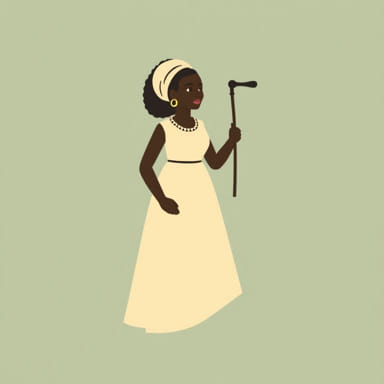
Sojourner Truth was one of the most influential African American women in American history. Born into slavery, she overcame unimaginable hardship and became a leading voice in the abolitionist and women’s rights movements. Her life story reflects strength, conviction, and a deep commitment to justice. She was not just a witness to the transformation of the United States through the Civil War and the abolition of slavery; she was an active participant. Her speeches, presence, and activism left an indelible mark on the history of civil rights and social equality.
Early Life and Enslavement
Sojourner Truth was born as Isabella Baumfree around 1797 in Ulster County, New York. She was one of at least 10 or 12 children born to James and Elizabeth Baumfree, who were enslaved by a Dutch-speaking family. Her first language was Dutch, and she did not learn to speak English fluently until later in life. During her childhood, she was sold multiple times and experienced brutal treatment under various masters.
Her early years were marked by physical labor, separation from family, and deep emotional wounds. As a teenager, she was forced to marry another enslaved man, with whom she had several children. In 1826, she made a bold decision to escape slavery with her infant daughter. She found refuge in a Quaker household, where she began to rebuild her life and explore religion more deeply.
Path to Freedom and Religious Awakening
After escaping slavery, Isabella eventually secured legal freedom for her son, Peter, who had been sold illegally. This court victory made her one of the first African American women to win such a case against a white man in the United States. Around this time, she experienced a profound spiritual awakening that would shape her future actions and identity.
In 1843, she changed her name to Sojourner Truth. The name reflected her new mission: to travel and speak the truth about slavery and inequality. Her faith gave her the strength and determination to confront hostile crowds, racism, and societal barriers. She believed that she was called by God to spread messages of justice, love, and liberation.
Public Speaking and Abolitionist Work
Sojourner Truth became a powerful public speaker despite having no formal education. Her speeches were passionate, direct, and deeply rooted in both personal experience and biblical references. She often collaborated with prominent abolitionists like Frederick Douglass and William Lloyd Garrison, sharing the stage and advocating for the end of slavery.
One of her most famous speeches, Ain’t I a Woman?, was delivered in 1851 at the Women’s Rights Convention in Akron, Ohio. In that speech, she challenged the prevailing notions of racial and gender inferiority. Although the exact words of the speech have been debated, its message has resonated for generations. She highlighted the intersection of race and gender, showing how Black women were doubly oppressed and demanding recognition of their humanity.
Key Points of Her Abolitionist Efforts:
- Spoke at antislavery meetings across the United States
- Raised awareness about the harsh realities of slavery
- Advocated for legal and social changes
- Published a memoir dictated to a friend, which helped spread her story further
Advocacy for Women’s Rights
While Sojourner Truth is often remembered for her abolitionist work, she was also a key figure in the women’s rights movement. She argued that the rights of women should be universal, including those of African American women who were often excluded from early feminist movements. Her voice brought attention to the fact that equality could not be achieved without including all women in the conversation.
She participated in many women’s rights events, giving speeches that emphasized the strength and resilience of women, particularly Black women. Her experiences as both a former slave and a mother gave her a unique perspective that was rarely heard in public forums at the time.
Later Years and Civil War Contributions
During the Civil War, Sojourner Truth worked to recruit Black soldiers for the Union Army. She also advocated for better conditions for African American troops and for freed slaves who were often left in dire poverty. Her efforts extended to meeting with President Abraham Lincoln in 1864, where they discussed her support for emancipation and equality.
After the war, she continued her activism by pushing for land grants for freed slaves, a campaign she referred to as Give us our forty acres and a mule. Though the government never fulfilled these promises, her advocacy highlighted the ongoing struggle for economic justice and racial equity in post-war America.
Contributions in Later Life:
- Worked for the Freedmen’s Bureau
- Lobbied for land redistribution to former slaves
- Fought against racial segregation in public transportation
- Spoke at numerous public events until old age
Legacy and Cultural Impact
Sojourner Truth passed away in 1883, but her legacy has continued to grow. She became a symbol of courage, faith, and perseverance. Schools, parks, and monuments have been named in her honor. Her face was chosen to appear on the redesigned U.S. $10 bill alongside other women who shaped American history.
She has inspired writers, activists, and educators across generations. Her commitment to truth, justice, and equality makes her a timeless figure in American history. Through her life, she showed how the power of one determined voice can create lasting change.
Reasons for Her Enduring Legacy:
- She bridged the movements for abolition and women’s rights
- She gave voice to the marginalized and oppressed
- She overcame personal hardship and systemic injustice
- Her life exemplified the power of faith-driven activism
Sojourner Truth’s life was a powerful journey from slavery to freedom, from silence to a commanding voice for justice. She used her personal story to fuel a movement that changed the course of American history. As both a symbol and a real human being, she challenges us to confront injustice wherever it exists and to use our voices to speak the truth. Her story remains relevant in today’s conversations about race, gender, and human rights, reminding us that real change begins with courage and conviction.