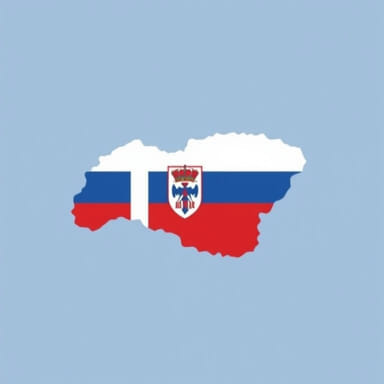
When exploring the diverse range of languages spoken around the world, it’s natural to ask whether Serbian is considered a language in its own right. The answer is yes Serbian is indeed a language with a rich linguistic and cultural history. It is spoken by millions of people and holds official status in several regions. However, understanding the full scope of the Serbian language involves more than a simple affirmation. To fully grasp what Serbian represents, it helps to look at its origins, structure, use, and place among other Slavic languages.
Origin and Classification of the Serbian Language
Serbian is a South Slavic language, which places it in the larger Indo-European language family. It shares roots with other Slavic tongues like Croatian, Bosnian, Slovenian, and Macedonian. Historically, Serbian developed from the Old Church Slavonic used in the region by early Slavic communities. Over the centuries, it evolved and was shaped by historical, political, and cultural influences, especially from the Ottoman Empire and the Austro-Hungarian Empire.
Part of the Serbo-Croatian Continuum
One of the key facts about Serbian is that it forms part of the South Slavic dialect continuum known as Serbo-Croatian. This linguistic grouping includes Serbian, Croatian, Bosnian, and Montenegrin. These languages are mutually intelligible to a high degree, meaning speakers of one can generally understand the others. Despite their similarities, each is considered a separate standardized language today, mainly for political, cultural, and national reasons.
Alphabet and Writing System
One unique feature of Serbian is its dual-alphabet system. Serbian is written using both the Cyrillic and Latin alphabets. This dual script usage is relatively rare in the world of languages and reflects the country’s historical influences and regional diversity.
- Cyrillic script: Officially recognized and used in formal state communication and education in Serbia.
- Latin script: Widely used in media, business, and informal communication.
The flexibility of script usage allows Serbian speakers to switch easily between alphabets, depending on the context and platform.
Phonology and Grammar of Serbian
Serbian phonology and grammar make it both complex and expressive. Like many Slavic languages, Serbian is highly inflected, which means that nouns, adjectives, pronouns, and verbs change form depending on their role in the sentence. It uses grammatical cases, verb conjugations, and gender distinctions that can be challenging for non-native speakers.
Main Features of Serbian Grammar:
- Seven grammatical cases: nominative, genitive, dative, accusative, vocative, instrumental, and locative
- Three genders: masculine, feminine, and neuter
- Three numbers: singular, plural, and sometimes dual
- Aspectual verb pairs for perfective and imperfective meanings
Despite its grammatical richness, Serbian remains a very learnable and structured language for those who take the time to study it.
Where Serbian Is Spoken
Serbian is primarily spoken in Serbia, where it is the official language. However, its use extends beyond national borders. It is one of the official languages of Bosnia and Herzegovina and is widely spoken in Montenegro and parts of Kosovo. Serbian-speaking communities can also be found in Croatia and in diaspora communities around the world, including in North America, Australia, and Western Europe.
Number of Speakers
Estimates suggest that there are more than 8 million native Serbian speakers worldwide. This figure includes both those residing in the Balkans and members of the Serbian diaspora. Because of migration and global communication, Serbian continues to be an active and evolving language used across continents.
Is Serbian a Dialect or a Language?
One of the questions that sometimes arises is whether Serbian is a dialect or a distinct language. Linguistically, it could be classified as a standardized variety of the broader Serbo-Croatian language. However, in political and cultural terms, Serbian is recognized as a fully independent language.
This distinction is important because language is not only about linguistic features it’s also about identity, heritage, and national pride. For Serbian speakers, their language is a crucial part of who they are, and it is treated accordingly in education, literature, and official communication.
Serbian in Literature and Media
The Serbian language boasts a long literary tradition, dating back to medieval times. One of the earliest significant works written in Serbian is the ‘Miroslav Gospel,’ an illuminated manuscript from the 12th century. Over time, Serbian literature has produced notable authors such as Ivo Andrić, who received the Nobel Prize in Literature, and contemporary writers like Danilo Kiš and Dobrica Ćosić.
In modern times, Serbian is used extensively in media, including newspapers, television, radio, and online platforms. The film and music industries in Serbia also thrive, contributing to the preservation and promotion of the language. Television series, documentaries, and pop culture content produced in Serbian reach audiences throughout the Balkan region and beyond.
Language Education and Preservation
In Serbia, the language is a core part of the national school curriculum. Students are taught both the Cyrillic and Latin scripts, as well as grammar, vocabulary, and literature. Serbian language education helps ensure that new generations remain fluent and literate in both spoken and written forms.
Outside Serbia, efforts are made to preserve Serbian in diaspora communities through weekend schools, cultural associations, and church-based language programs. These initiatives aim to maintain the linguistic identity of Serbian families living abroad.
Yes, Serbian Is a Language
To summarize, Serbian is undeniably a language rich in history, structure, and cultural depth. It is not merely a dialect or regional variation but a fully developed and standardized linguistic system with official status in multiple countries. Its dual-script nature, grammatical complexity, and literary tradition make it both unique and significant on the global linguistic stage. As a South Slavic language, it shares similarities with Croatian, Bosnian, and Montenegrin, yet it retains its own distinctive character and identity. Whether spoken in Belgrade or in Serbian communities across the world, the Serbian language continues to thrive and evolve.