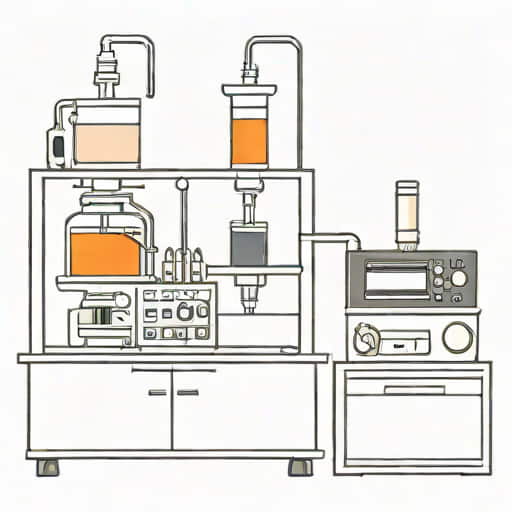
Liquid chromatography tandem mass spectrometry, commonly abbreviated as LC-MS/MS, is a powerful analytical technique widely used in chemistry, biochemistry, pharmacology, and environmental sciences. This method combines the physical separation capabilities of liquid chromatography (LC) with the mass analysis capabilities of tandem mass spectrometry (MS/MS). LC-MS/MS allows scientists to separate complex mixtures, identify individual compounds, and quantify trace amounts of substances with exceptional sensitivity and specificity. Its versatility and precision make it indispensable in research, clinical diagnostics, drug development, and environmental monitoring.
Principles of Liquid Chromatography
Liquid chromatography is a technique used to separate components in a mixture based on their interactions with a stationary phase and a mobile phase. The sample is injected into a liquid mobile phase, which flows through a column containing a stationary phase. Different compounds interact differently with the stationary phase, causing them to elute at different times. This separation process is essential in complex mixtures where overlapping peaks or co-elution could obscure accurate identification and quantification. In LC-MS/MS, high-performance liquid chromatography (HPLC) is often employed to achieve high resolution and reproducibility.
Mass Spectrometry Overview
Mass spectrometry is an analytical technique used to measure the mass-to-charge ratio (m/z) of ions. In tandem mass spectrometry (MS/MS), the instrument performs two rounds of mass analysis separated by a fragmentation step. This allows for highly selective and sensitive detection of target analytes. The first mass analyzer selects ions of a specific m/z, which are then fragmented in a collision cell. The resulting fragments are analyzed by the second mass analyzer, producing a unique spectral fingerprint for the compound. This capability is particularly valuable in identifying and quantifying substances in complex biological or environmental matrices.
Combining LC and MS/MS
When liquid chromatography is combined with tandem mass spectrometry, the resulting LC-MS/MS technique allows for both separation and identification of compounds. The liquid chromatography step separates the components of a mixture, while the mass spectrometry step provides molecular-level identification and quantification. This dual capability is especially useful for analyzing biological samples, such as blood, urine, or tissue extracts, where numerous compounds may coexist at vastly different concentrations. LC-MS/MS provides both qualitative and quantitative information in a single analysis.
Applications in Clinical Diagnostics
LC-MS/MS has revolutionized clinical diagnostics by enabling precise measurement of biomarkers, therapeutic drugs, and metabolites. It is widely used in endocrinology to measure steroid hormones, in toxicology to detect drugs of abuse, and in pharmacokinetics to study drug metabolism and clearance. The high sensitivity and specificity of LC-MS/MS make it particularly suitable for detecting trace levels of compounds that might be undetectable with conventional assays. Additionally, its ability to quantify multiple analytes simultaneously streamlines laboratory workflows and reduces the need for multiple tests.
Applications in Pharmaceutical Research
In pharmaceutical research and drug development, LC-MS/MS plays a critical role in identifying potential drug candidates, understanding metabolic pathways, and ensuring quality control. The technique allows researchers to detect and quantify drugs and their metabolites in biological matrices, facilitating pharmacokinetic and pharmacodynamic studies. Furthermore, LC-MS/MS is used in bioequivalence studies to compare the absorption and metabolism of generic drugs with reference products. Its sensitivity enables detection of compounds at very low concentrations, supporting early-stage drug development and safety assessment.
Environmental and Food Analysis
LC-MS/MS is also extensively used in environmental and food analysis to detect pollutants, pesticides, mycotoxins, and other contaminants. The combination of chromatography and tandem mass spectrometry ensures high selectivity, allowing analysts to identify and quantify trace contaminants even in complex matrices such as soil, water, or food samples. This capability is crucial for regulatory compliance, public health monitoring, and ecological studies. LC-MS/MS provides reliable, reproducible results that inform risk assessment and safety standards.
Technical Components of LC-MS/MS
Understanding the technical components of LC-MS/MS helps explain its functionality and effectiveness. The system typically consists of a liquid chromatography unit, an ionization source, one or more mass analyzers, and a detector. The LC unit performs the initial separation, while the ionization source commonly electrospray ionization (ESI) or atmospheric pressure chemical ionization (APCI) converts analytes into charged ions. The mass analyzers, such as quadrupoles or time-of-flight instruments, perform mass selection and fragmentation. Finally, the detector records the ions, producing data that can be analyzed for qualitative and quantitative information.
Advantages of LC-MS/MS
- High sensitivity and specificity for complex mixtures.
- Ability to detect trace levels of compounds in biological or environmental samples.
- Simultaneous qualitative and quantitative analysis.
- Wide applicability across multiple fields, including clinical, pharmaceutical, and environmental sciences.
- Reduced sample preparation compared to traditional analytical methods.
Challenges and Considerations
Despite its advantages, LC-MS/MS presents certain challenges. Sample preparation can be critical to prevent matrix effects, ion suppression, or contamination. Instrumentation requires regular maintenance and calibration to ensure accurate and reproducible results. Additionally, data analysis can be complex due to the large volume of spectral information generated. Analysts must be well-trained to interpret the data and confirm compound identity with high confidence. Understanding these limitations is essential to optimize LC-MS/MS methods for reliable results.
Future Perspectives
The future of LC-MS/MS is promising, with continuous advancements in instrumentation, ionization techniques, and data analysis software. High-resolution mass spectrometry, improved chromatographic columns, and faster scanning capabilities are enhancing the technique’s sensitivity, speed, and throughput. Integration with bioinformatics tools allows for more sophisticated analysis of large datasets, supporting proteomics, metabolomics, and personalized medicine. LC-MS/MS continues to evolve, offering new opportunities for scientific discovery, clinical diagnostics, and environmental monitoring.
Liquid chromatography tandem mass spectrometry is a highly versatile and powerful analytical tool that combines separation and identification capabilities. By integrating liquid chromatography with tandem mass spectrometry, LC-MS/MS provides precise, sensitive, and selective analysis of complex mixtures in a wide range of applications, from clinical diagnostics to pharmaceutical research and environmental analysis. Its ability to detect and quantify trace compounds, along with its reproducibility and reliability, makes it an essential technique in modern analytical chemistry. As technology advances, LC-MS/MS will continue to play a critical role in scientific research, healthcare, and safety monitoring, demonstrating its unparalleled value across multiple disciplines.