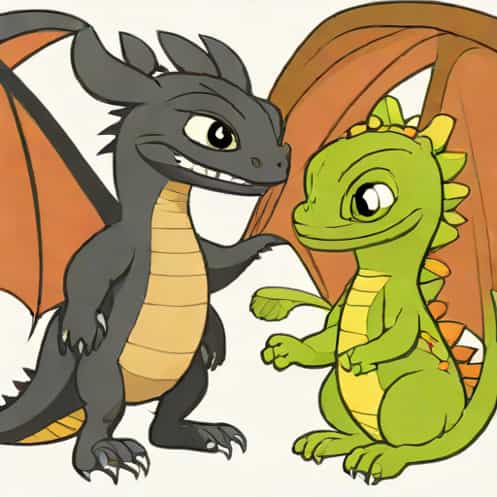
In the world of How to Train Your Dragon, not all dragons are sleek, silent flyers like Toothless. Some are loud, chaotic, and wildly unpredictable, and few represent this better than Barf and Belch. These two-headed Zippleback dragons are among the most memorable creatures in the franchise, known for their explosive abilities and contrasting personalities. Understanding How to Train Your Dragon Barf and Belch is not just about mastering commands, but about balance, coordination, and respect for their unique nature. Their presence adds humor, danger, and depth to the dragon universe.
Who Are Barf and Belch
Barf and Belch are a single dragon with two distinct heads, each with its own temperament and function. They belong to the Zippleback species, a class of dragons famous for their gas-and-spark firepower.
Despite being one body, the two heads often argue, making training both challenging and fascinating.
The Meaning Behind Their Names
Their names reflect their fire-breathing process. One head produces flammable gas, while the other ignites it. This unique mechanism requires precise coordination.
Without teamwork, their greatest strength becomes a liability.
The Zippleback Species Explained
Zipplebacks are known for their intelligence and power, but also for their stubbornness. They are not naturally cooperative, even with themselves.
This makes Barf and Belch a perfect example of why patience is essential in dragon training.
Key Traits of Zipplebacks
- Two independent heads
- Explosive ranged attacks
- Strong territorial instincts
- High intelligence
Understanding the Dual Personality
Training Barf and Belch begins with understanding that each head responds differently. One may be more aggressive, while the other is cautious or easily distracted.
Ignoring one head often leads to chaos.
Why Balance Matters
Both heads must feel acknowledged. Favoring one creates resistance from the other, resulting in misfires or refusal to cooperate.
Successful training focuses on unity rather than control.
Communication Is the First Step
Clear communication is critical when learning how to train your dragon Barf and Belch. Commands must be consistent and reinforced through repetition.
Mixed signals confuse the dragon and increase internal conflict.
Effective Communication Techniques
- Use consistent verbal cues
- Reinforce actions with gestures
- Maintain calm body language
Establishing Trust with Both Heads
Trust is built through routine and positive reinforcement. Barf and Belch respond best when they feel safe and understood.
Trust cannot be rushed.
Building Trust Over Time
Spend time with them outside of training.
Reward cooperative behavior.
Avoid punishment-based methods.
Managing Their Firepower
The signature ability of Barf and Belch is their explosive fire attack. One head releases gas, the other sparks it. Training must focus on timing.
Uncoordinated attacks can harm allies.
Steps to Control Explosions
- Train gas release separately
- Practice spark ignition timing
- Gradually combine both actions
Common Training Challenges
Barf and Belch often resist commands simply because the two heads disagree. This internal conflict is their biggest obstacle.
Trainers must stay patient.
Typical Issues Trainers Face
- One head acting independently
- Delayed responses
- Overuse of explosive attacks
The Role of the Trainer
Training a Zippleback requires authority balanced with empathy. The trainer must act as a mediator between the two heads.
Leadership is about guidance, not dominance.
Qualities of a Successful Trainer
Patience.
Consistency.
Emotional awareness.
Teamwork Between Heads
When Barf and Belch begin to work together, their effectiveness increases dramatically. Training sessions should reward moments of cooperation.
Teamwork is the ultimate goal.
Encouraging Cooperation
- Reward synchronized actions
- Pause training during conflicts
- Reinforce shared success
Flight Training with Barf and Belch
Flying with a two-headed dragon adds another layer of complexity. Balance in the air depends on mutual agreement between both heads.
Disagreement mid-flight can be dangerous.
Safe Flight Practices
Start with short flights.
Use clear directional cues.
Train in open spaces.
Emotional Intelligence in Dragon Training
Barf and Belch respond strongly to emotional cues. Anger or fear from the trainer often escalates their internal conflict.
Calm energy promotes calm behavior.
Reading Emotional Signals
Head movements.
Vocal sounds.
Wing tension.
Why Barf and Belch Are Valuable Allies
Despite their difficulties, Barf and Belch are extremely powerful allies. Their explosive attacks can control large battlefields.
When trained properly, they become reliable and loyal.
Lessons Barf and Belch Teach Us
The story of Barf and Belch highlights themes of cooperation, patience, and understanding differences. Even when parts of ourselves conflict, balance is possible.
These lessons resonate beyond dragon training.
Life Lessons from Zipplebacks
- Teamwork requires effort
- Differences can be strengths
- Patience leads to progress
Common Misconceptions About Barf and Belch
Some see them as unreliable or dangerous, but most issues arise from improper training.
With the right approach, they are highly capable.
Why Fans Love Barf and Belch
Their chaotic nature and constant bickering add humor and realism to the How to Train Your Dragon universe. They represent imperfect teamwork.
This makes them relatable and memorable.
Learning how to train your dragon Barf and Belch is about embracing complexity rather than avoiding it. Their two-headed nature challenges traditional training methods, but it also offers unique rewards. With patience, clear communication, and respect for both heads, trainers can unlock the full potential of this powerful Zippleback.
Barf and Belch remind us that even the most chaotic partnerships can thrive when guided with understanding and balance. Their journey is not just about dragons, but about cooperation in all its forms.